Pillar 01 · More than soil from a bag

The Substrate Library

The Guild's reference shelf on growing media, with recipes you can actually mix. New entries as the bench work finishes.

What it is

Growing media, treated as a system.

Each entry covers a single concept or recipe, the science and the practice in the same place. Foundation reading first, then the recipes that fix specific problems.

Who it's for

Growers who want recipes that hold.

For people building a substrate practice that works across plant families. Apprentices start with the foundation entries; Growers and Educators reach for the recipes.

How it's written

Tested at the bench.

Every recipe runs in the Guild's own collection. No claims without a cited source or a documented test.

15 entries · added to regularly

The reference shelf.

Pale roots running through dark potting mix in a nursery pot cut open down the sides

Foundation

The Root Zone

What roots need from a potting mix, how the common bagged mixes differ, and how to check whether the mix is the problem.

Five small piles of potting-mix ingredients on a linen cloth: pale pumice stones, white round granules, reddish-brown coir fiber, brown bark chips and rounded brown clay pebbles

Going deeper

How Substrate Actually Works

Where water sits in a pot, what drainage rocks really do, how much air a mix holds after watering, and how pH, EC and exchange capacity affect what roots can use.

Botanical specimen tray with horticultural ingredients

Reference

The Aroid Ingredient Glossary

Pumice, perlite, zeolite, charcoal, coir, sphagnum, castings and more: what each one does in a chunky tropical mix, what to buy, and the Guild's verdict, including the ones we leave out.

Overhead view of a Monstera leaf, a wooden scoop and bowls of pumice, bark chips and a dark, crumbly mix on a wooden board

Practice

Designing a Mix: The Logic Behind the Ratios

The Guild's framework for designing a substrate: work backward from what the roots need, then adapt a published mix for your humidity, temperature, pot and feeding.

Three young plants in black nursery pots, each potted in a coarse mix of white mineral granules, small gray-green pebbles and dark crumbly organic matter. One has green leaves with red streaks, one a red leaf edged in pale green.

System Overview

The Petruscio Substrate System

Five recipes, three layers, no bark. The map of which Guild mix we use for what, from plants regrowing damaged roots to tissue-culture plantlets to everyday care.

Five labeled piles on kraft paper: quarter-inch pumice, coarse perlite, buffered coconut coir, earthworm castings and horticultural charcoal, the five ingredients of Standard Mineral Mix

Daily-Driver Recipe

Standard Mineral Mix v5

Sixty-five percent mineral, thirty-five percent organic. The Guild's default mix for healthy plants that aren't climbing a pole or slab, alongside ICU Mix for recovery and Aroid Mineral Mix for climbing epiphytes.

A kraft tray of bark-free mineral mix, mostly white pumice with black charcoal, perlite, a patch of gray-green zeolite and a little coir, with a metal scoop, beside a young climbing aroid on a moss pole in a terracotta pot

Specialist Recipe

Aroid Mineral Mix v5

Eighty percent mineral with the charcoal counted in, twenty percent organic, no bark. The Guild's mix for climbing Philodendron, Monstera, Anthurium and the other aroids we grow up a pole.

An Alocasia corm, blackened and scarred on its lower half and wrapped in dry, papery old leaf bases, with pale new roots and a green stem, sitting on dark and pale granules in a clear plastic pot

Recovery Recipe

ICU Mix v5

Seventy percent mineral, zeolite included, and zero bark. The Guild's recovery mix for a plant whose rotted or damaged roots have been trimmed away, and the aftercare we follow while it grows new ones.

Young Begonia darthvaderiana × malachosticta plantlets with glossy bronze leaves edged in pale green, growing in a black tray of dark round granules mixed with white perlite

Specialist

Tissue Culture Acclimation
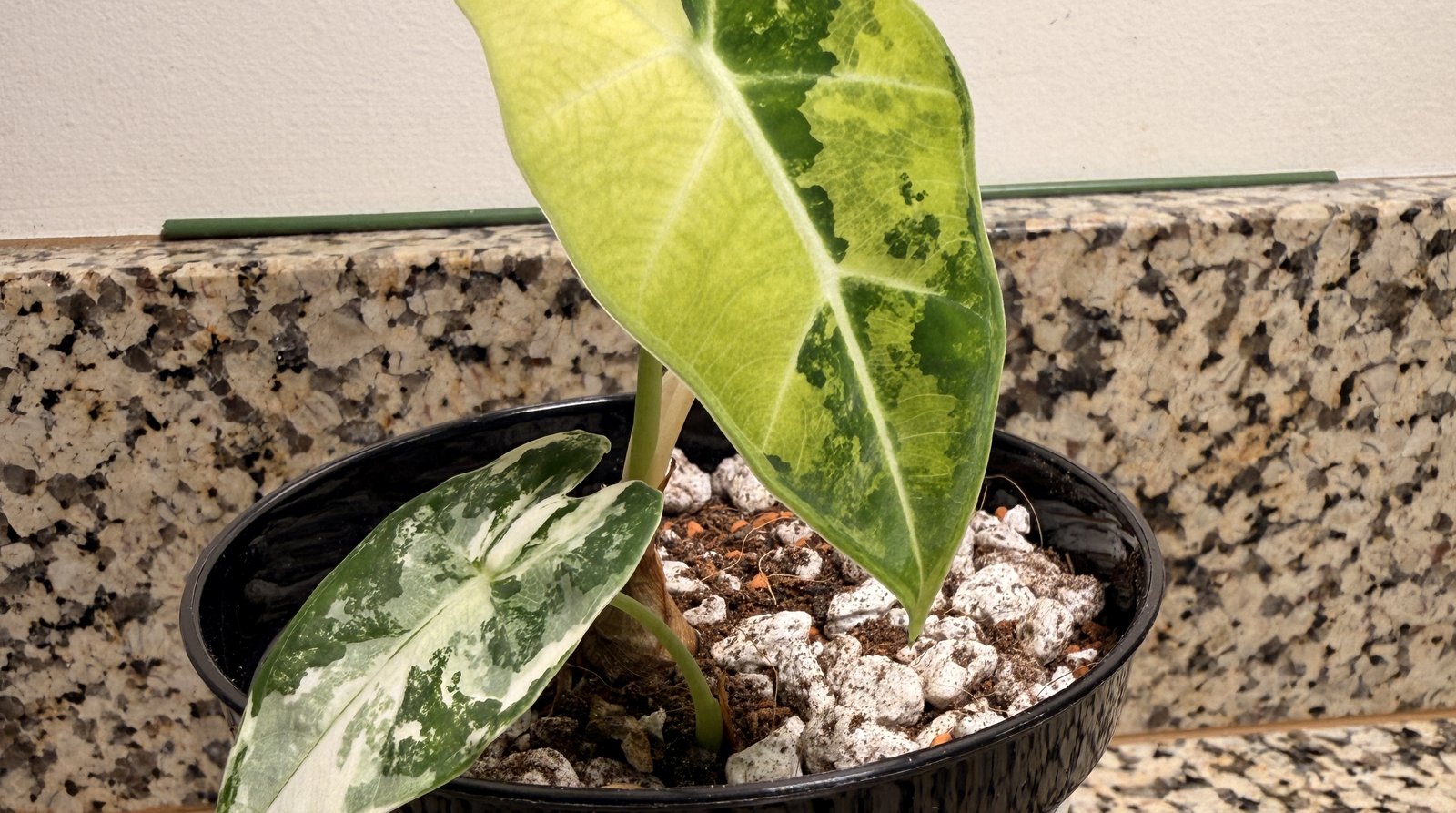
Our 50/50 mix of Fluval Stratum and perlite for plantlets fresh out of the flask, and the aftercare we follow while they adjust to open air.

A young variegated Alocasia 'Frydek Variegata' in a black nursery pot, the mix around its stem showing white perlite and pumice, dark coir, and small rust-colored bits of calcined clay

Genus Recipe

Alocasia Bark-Free Mix v1
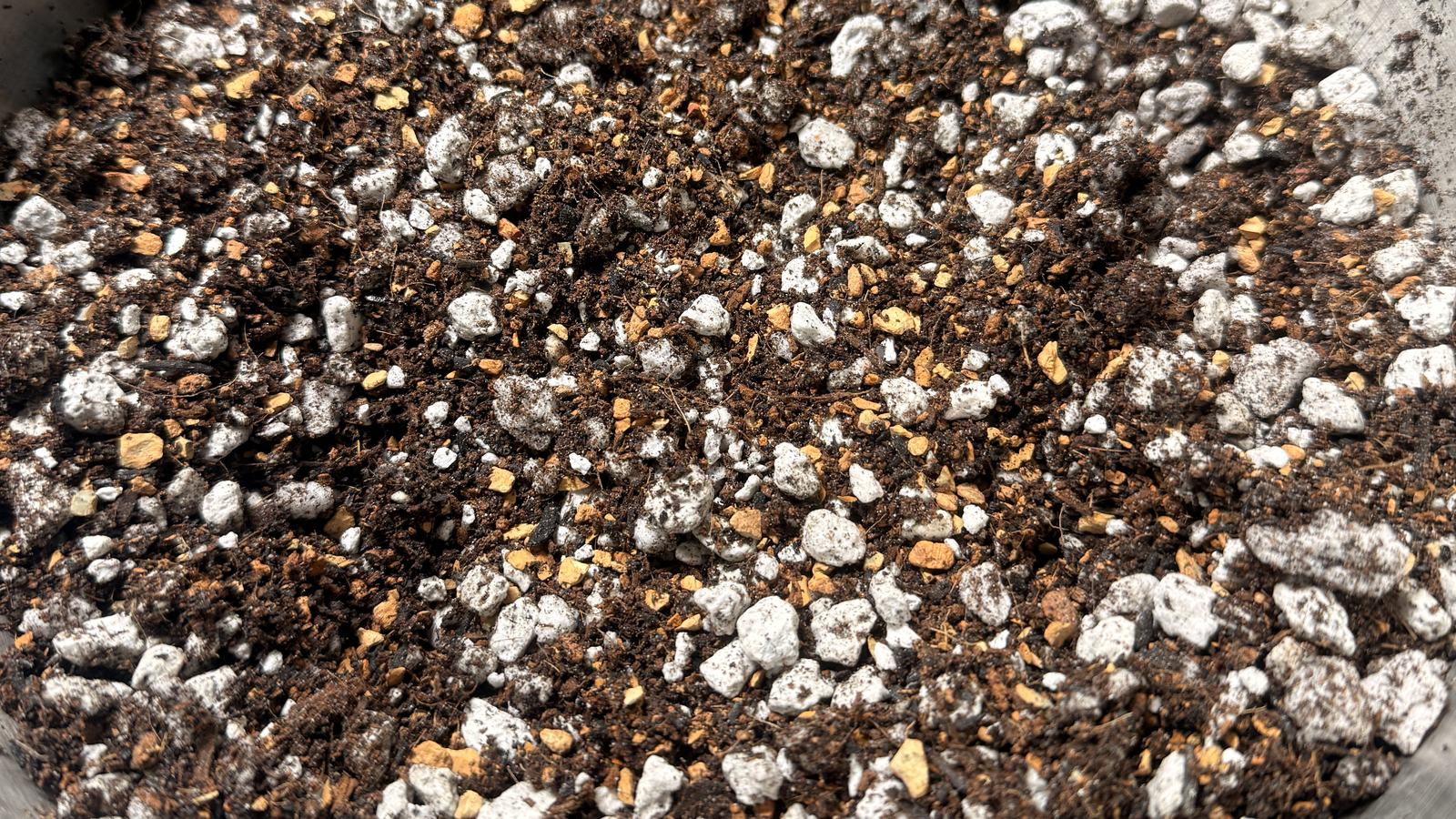
Thirty percent coir, the rest mostly pumice, perlite and calcined clay, and no bark. The mix we pot our Alocasia into, with more coir than our other mineral mixes because the one Alocasia study we found favored steady moisture.

Close-up of loose potting mix: dark brown fibrous organic matter speckled with white granules and small tan chips

Deep Dive

Substrate at Scale: Why a Bag of Mix Is a Supply Chain

Every ingredient in a chunky aroid mix has a supply chain. Where peat, sphagnum, coir, bark, pumice, perlite, zeolite, charcoal and castings come from, and what each one costs beyond the price.

A walnut tray with six compartments, labeled peat, coir, bark, perlite, pumice and compost, each holding that ingredient

Deep Dive · Buyer's Guide

Reading the Bag
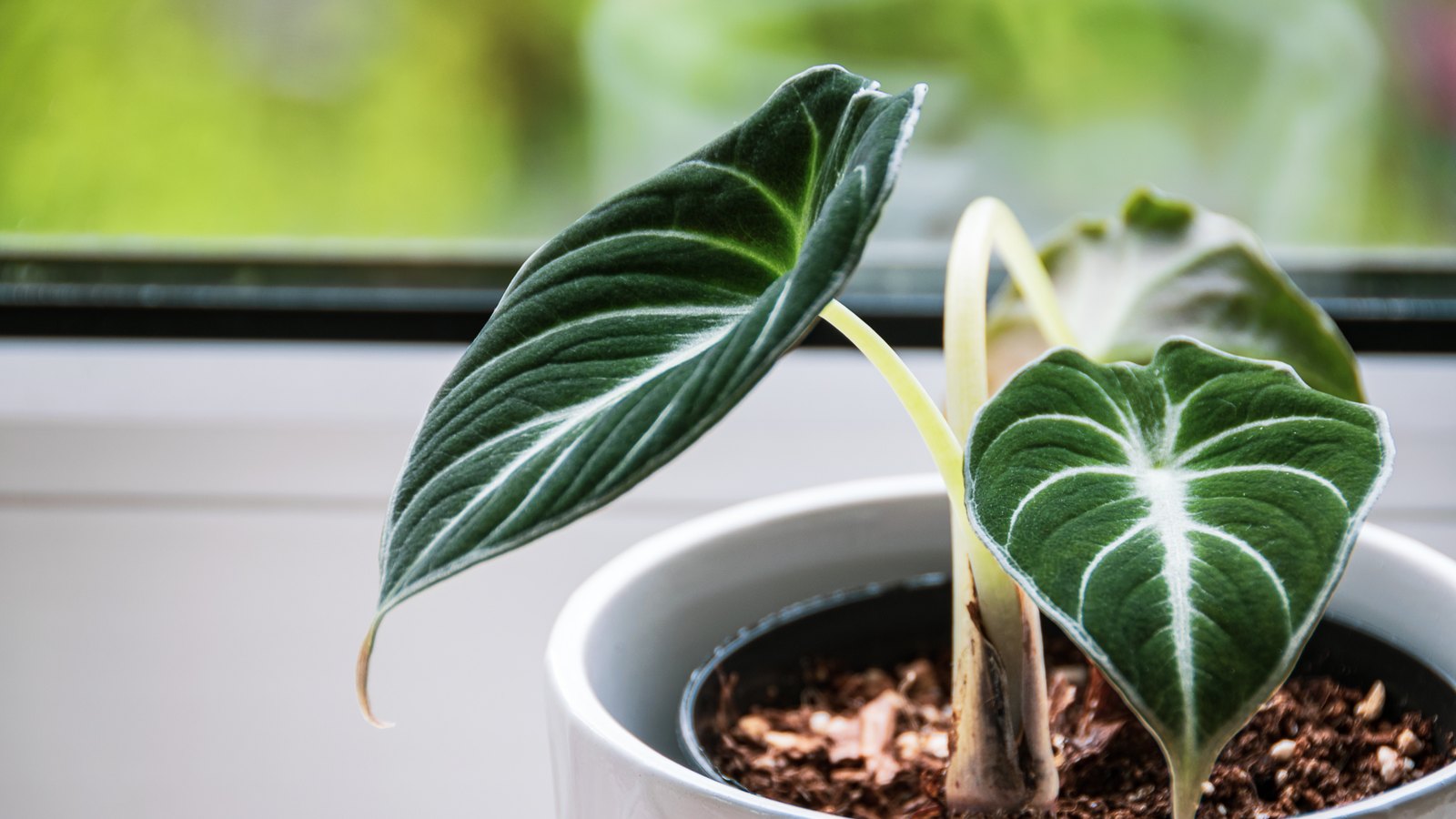
Every bag of commercial potting mix is four decisions stacked together: base, aeration, charge, and biology. How to read them off any bag, plus a brand-by-brand look at FoxFarm, Espoma, Pro-Mix, Coast of Maine and more.

A variegated Alocasia 'Frydek' with cream-and-green splashed leaves in a dark gray pot, pale porous granules on the surface of the mix

Reasoning · Aroids

Alocasia Is Not a Climber
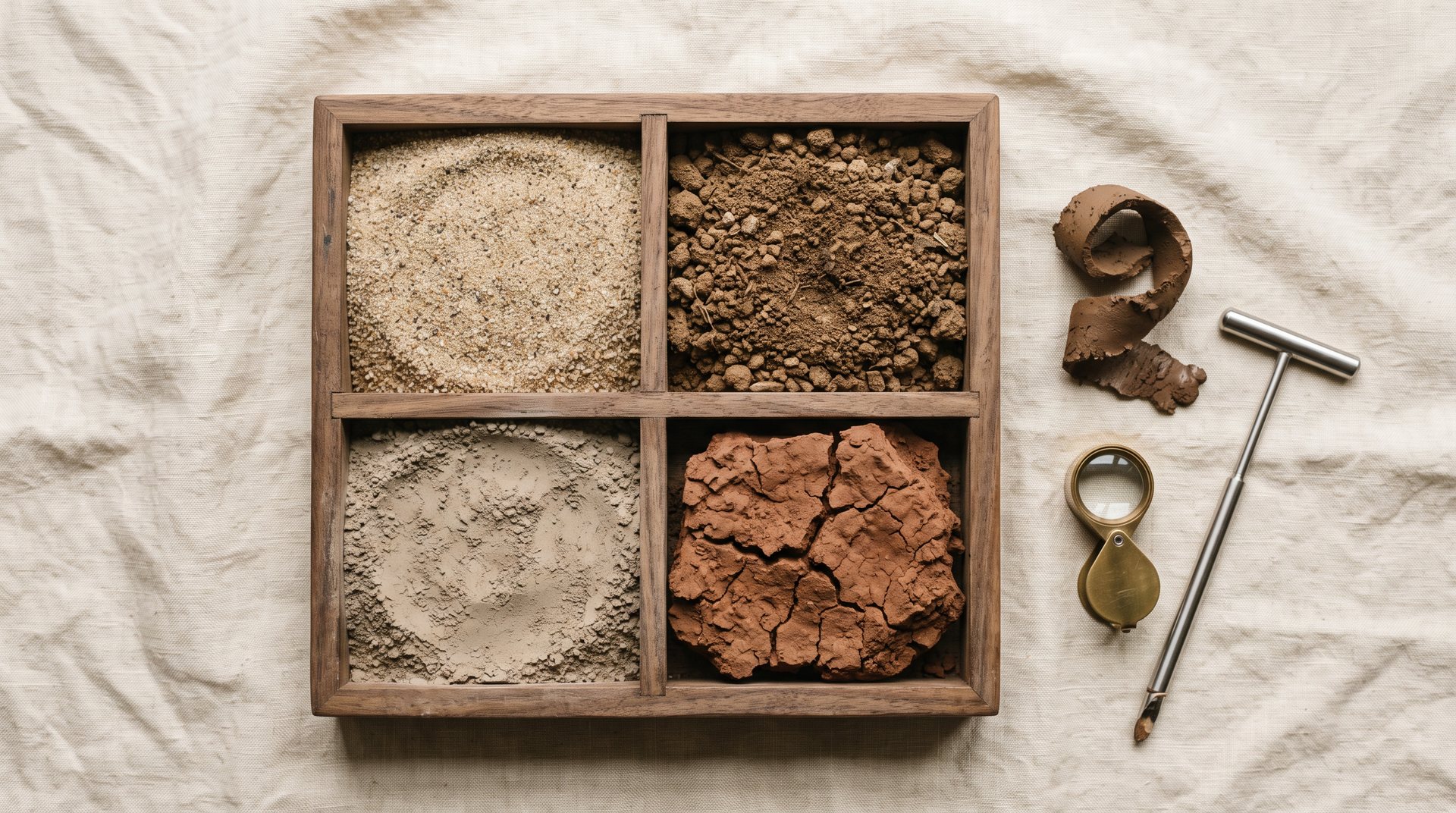
Alocasia doesn't climb, so the climbing rationale a retail guide gives for the chunky aroid mix doesn't fit it. What bark does to air and water, and what one Alocasia study found about moisture.

A wooden specimen tray of native soils across the texture range: gritty sand, brown loam, gray silt loam, and a cracked red-brown clay clod, with a hand lens and soil probe alongside

Foundation · Garden Amendment

Reading Your Native Soil
Before you amend a bed, find out what you actually have. Three tests read the ground you inherited: the ribbon test for texture, the perc test for drainage, and a lab test for pH, organic matter, and CEC.

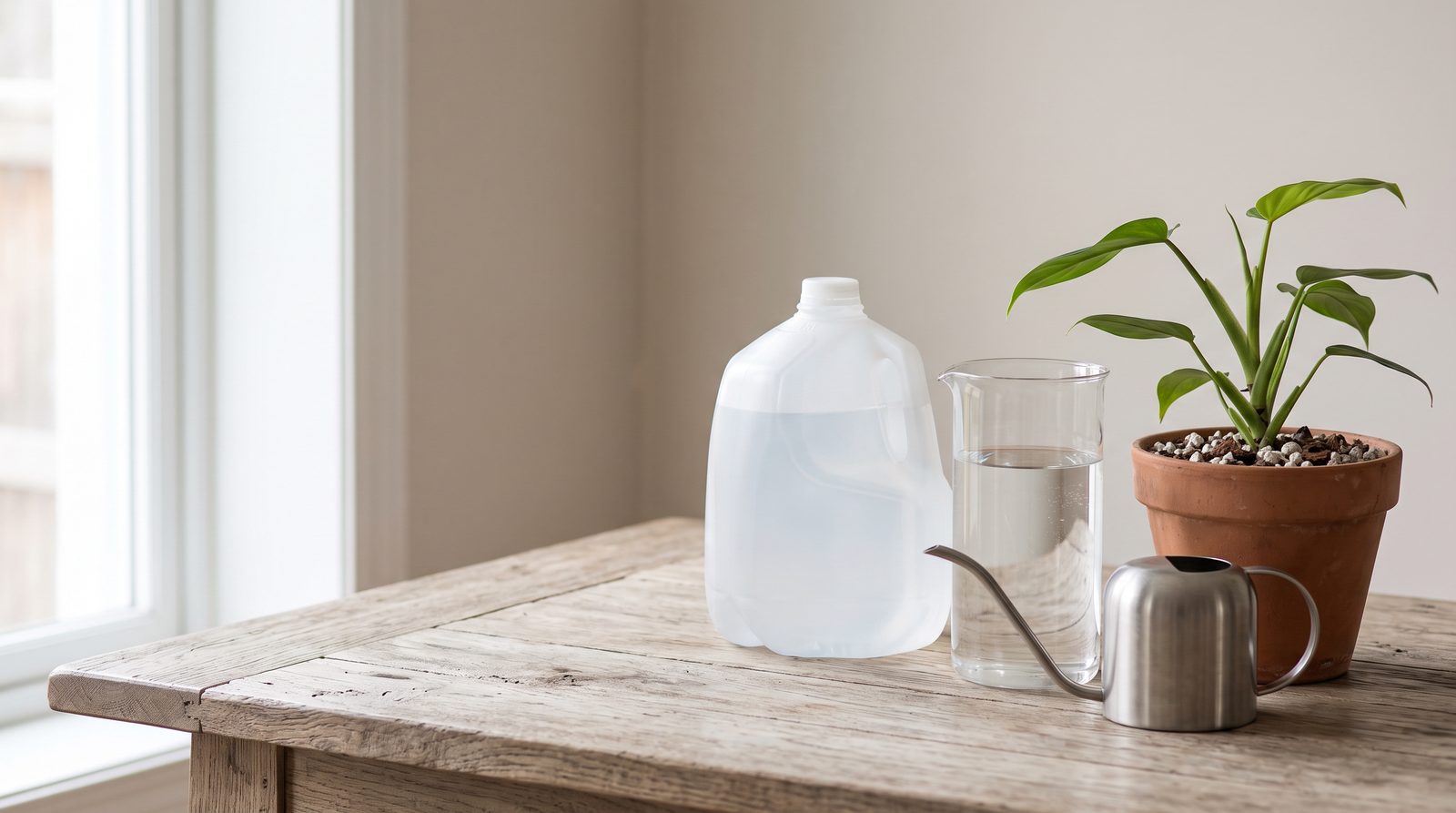
A translucent, unlabeled gallon jug of water, a glass beaker of water and a small steel watering can on a weathered wooden table, beside a young plant in a terracotta pot, in soft window light

Question · Feeding

Feeding on Distilled or RO Water

On distilled or RO water, the fertilizer, or a supplement, may be the only source of calcium and magnesium. What to look for on the label, what can go on a rotation, and why the pH needs watching.