Pillar 03 · The working-grower's reference

Field Manual

Pest IDs, repotting protocols, light troubleshooting, cross-genus substrate notes, as scannable dossiers for growers who keep collections. Not for first-plant Apprentices, not for the magazine reader. New dossiers as they are tested.

What it is

A reference shelf, not a magazine.

Each entry is a working dossier: vital statistics, modus operandi, where to look, what to do, in what order. Built to be read at the bench.

Who it's for

Growers under real pressure.

For people who already know what a thrips is and need the protocol calibrated, the lifecycle math explained, and the failure modes named.

How it's written

Opinion-bearing, not neutral.

Where the science calls for a hard line, the Field Manual takes one: which protocols actually work, which products to skip.

6 dossiers · published

The dossiers, in order.

Illustration of an adult thrips seen from above, with a slender brown segmented body and fringed wings spread, on white

Pest ID Dossier No. 01

Thrips: The Pest You Don't See Until You See Them Everywhere

How to tell which thrips you have, why that decides whether repotting helps, and a four-tier protocol built on what product labels allow indoors. Why spinosad is an outdoor tool, and why the Guild skips systemics.

Close-up of a two-spotted spider mite on a leaf underside, pale yellow-green with two dark patches, beside a leaf vein

Pest ID Dossier No. 02

Spider Mites: The Eight-Legged Pest That Hides on the Underside

Why spider mites go unnoticed until the leaves show it, the white-paper tap test, and a four-tier protocol built on water, what indoor labels allow, and predatory mites matched to the room. Why none of the abamectin labels we checked allows home use on indoor plants.

Illustration of an adult fungus gnat seen from above, wings spread, with long antennae and legs, on cream paper

Pest ID Dossier No. 03

Fungus Gnats: When the Substrate Itself Is the Problem

The flies are the part you see; the larvae in a wet, organic-rich mix do the root damage. How to find them, what the mix has to do with it, and a four-tier protocol that starts with watering and sanitation.

Illustration of an Asian lady beetle seen from above, orange with black spots and a black M-shaped mark on the pale plate behind its head, on cream paper

Field ID Dossier No. 04

Harlequin vs. Ladybug

How to tell the Asian lady beetle, an aphid predator that moves into houses in fall, from the harlequin bug, a stink bug that feeds on cabbage-family crops, and what to do about each.

Illustration of an aphid seen from above, drawn in the style of a natural-history plate on cream paper, with two cornicles at the rear of the abdomen

Pest ID Dossier No. 05

Aphids: Why a Few Become a Colony So Fast
Confirming most aphids by the cornicles, why live birth without mating builds a colony fast, and a four-tier protocol for houseplants and gardens that follows the product labels. Why the Guild recommends keeping sprays off milkweed.

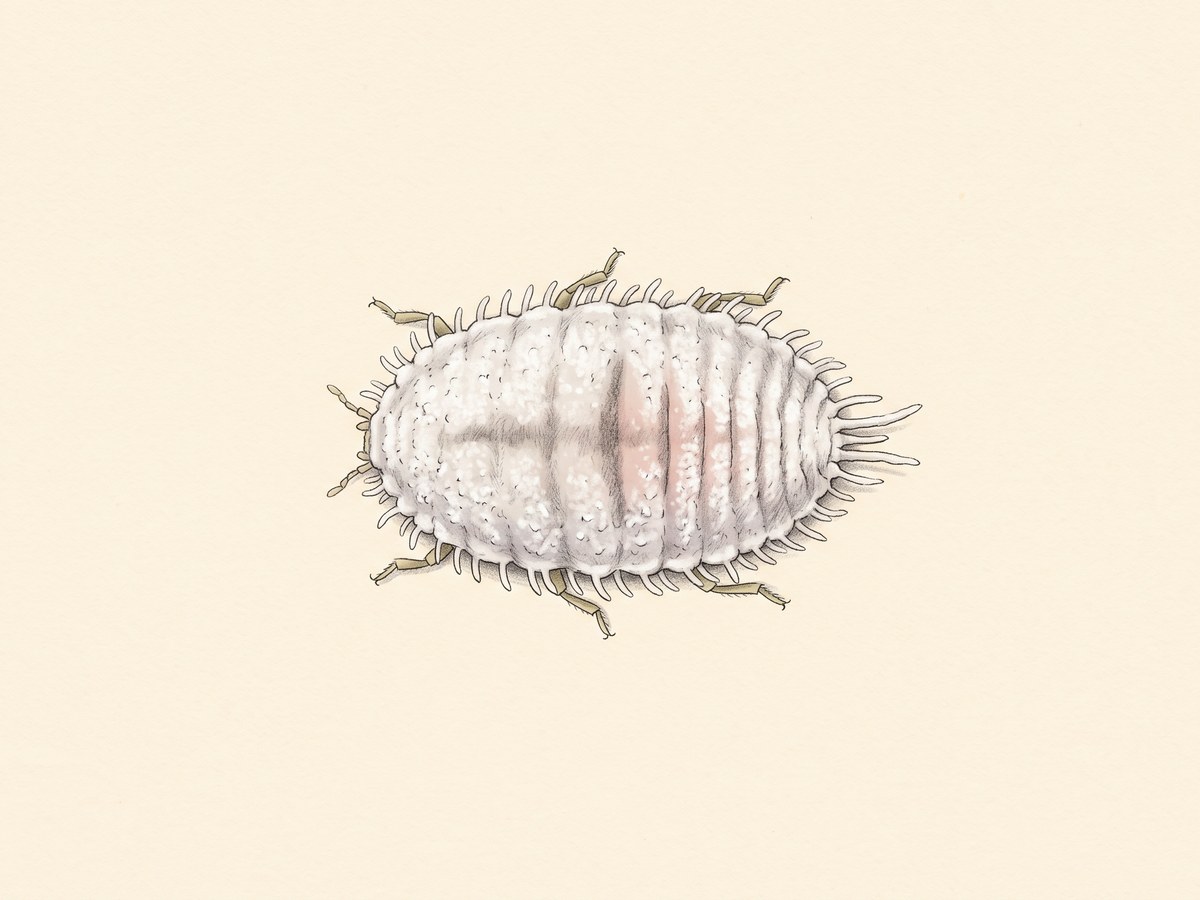
Naturalistic scientific specimen illustration of an adult mealybug, dorsal top-down view on warm cream paper, the oval body under a bloom of white wax with short filaments fringing the margin

Pest ID Dossier No. 06

Mealybugs: The Wax Is the Whole Problem

Why sprays struggle to reach waxed mealybugs, how to tell citrus from longtailed and why that decides which predator is worth buying, where root mealybugs hide, and a five-tier protocol built on removal, repeat sprays and labeled products.