The Plant Library · Genus Deep Dive

Monstera.

Forty-nine accepted species across the American tropics. The plant on every windowsill from Portland to Singapore. Sold as a meme, grown as an heirloom, photographed more than any other houseplant in history, and confused with at least three plants in entirely different genera. We're going to take it apart, one specimen at a time.

What it is

A working compendium

A genus deep dive built the way the Guild builds everything. Science where the science is settled. Opinions where they have to be. Substrate ratios at the end. Anatomy and biogeography for context, species profiles for the plants you'll actually grow, cultivar entries for the variegated world, and a dedicated disambiguation entry for the imposters.

Who it's for

Apprentices and Growers

For first-plant Apprentices who want to understand what they bought. For Growers deciding whether the next plant is a Thai Constellation or a Mint. For anyone who's been told a Rhaphidophora is a Mini Monstera and wants the actual story.

How it's written

Editorial, not whimsical

Latin names and a year of description where they help, plain English where they don't. Species profiles run on what the plant actually wants, not what makes a good Instagram caption. Specimens from the Petruscio collection show up in callouts. The plant is the subject; the grower is the witness.

Section 01 · Understanding the genus

The framework.

Five essays that do the theoretical lifting before you meet a single plant. Read these first if you want every species profile to land in context.
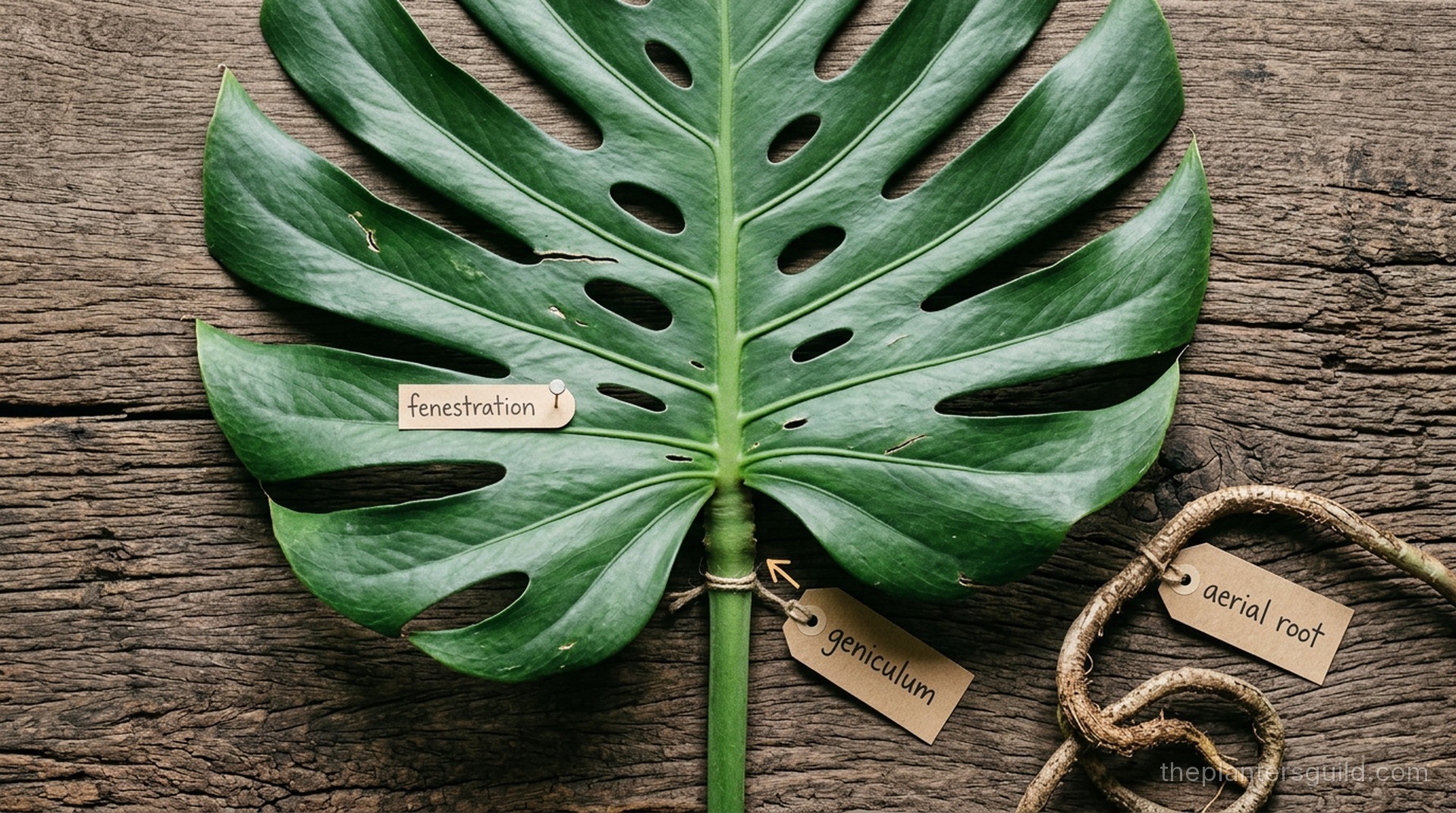
Single overhead Monstera deliciosa leaf with anatomical labels for fenestration, geniculum, and aerial root Essay · Anatomy

Field Manual · Genus essay

What Makes a Monstera, a Monstera

The leaves change shape with age. The aerial roots are not decoration. The geniculum is a joint, not a hinge. And every fenestration is a story about light. Anatomy is where every Monstera care decision actually comes from.

Live
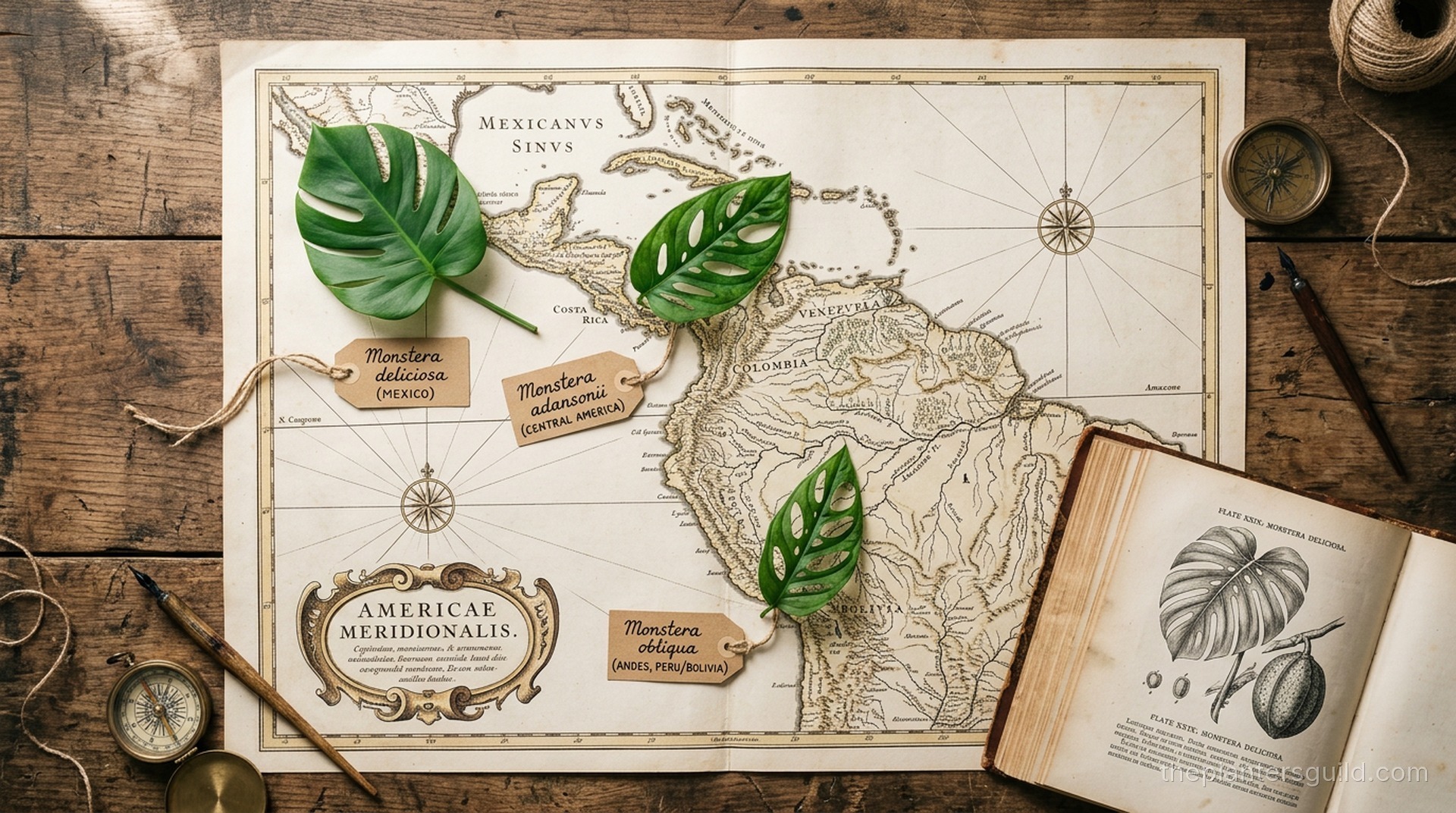
Antique map of Central and South America with Monstera leaves placed on their native regions Essay · Biogeography

Field Manual · Genus essay

From Southern Mexico to Bolivia

The genus is American. Strictly Neotropical, no exceptions. What Monstera did instead of crossing oceans was exploit one ecological strategy with relentless efficiency: the hemiepiphyte life. The plant on your shelf is a juvenile climber pretending to be a houseplant.
Live
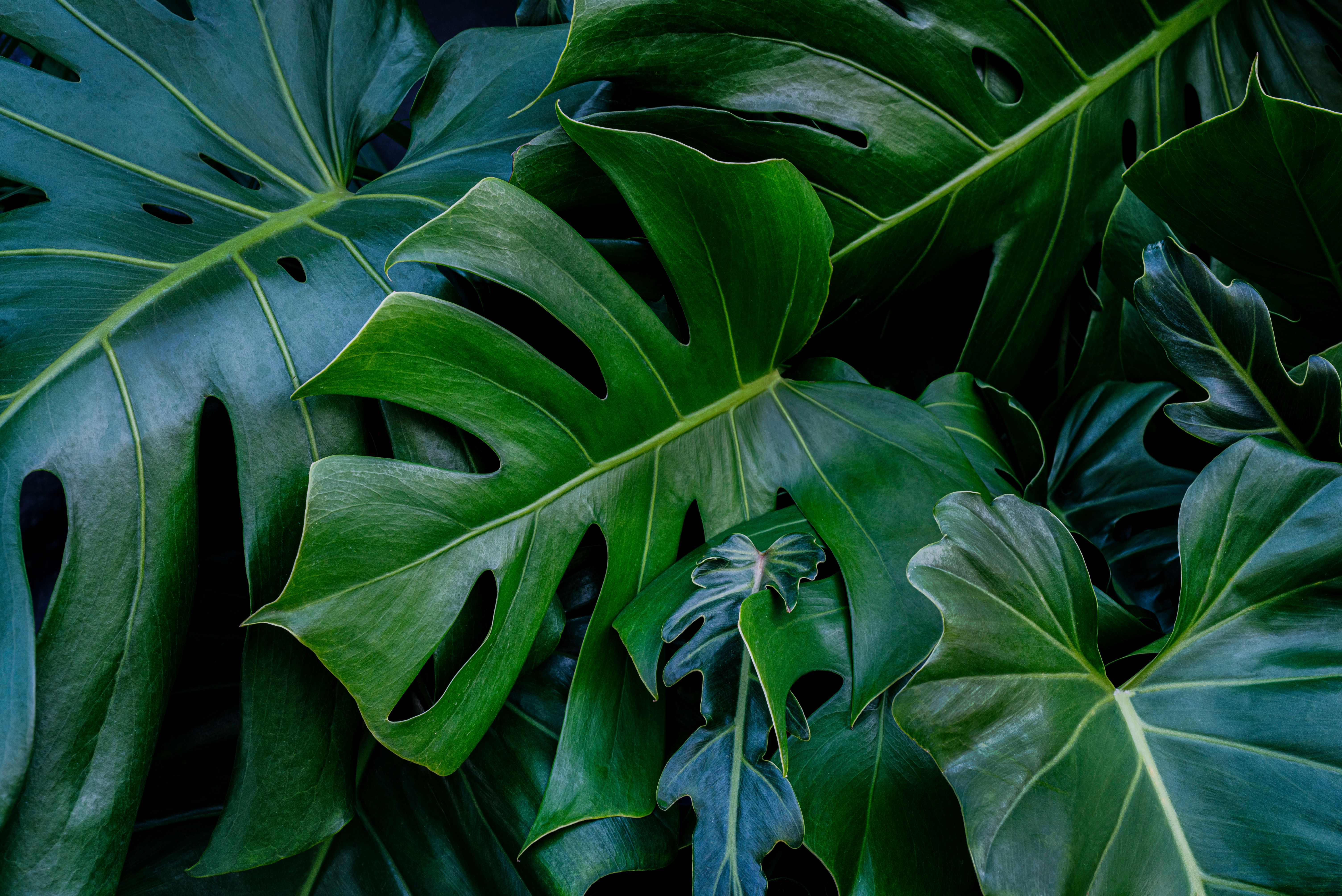
Dark, glossy fenestrated Monstera deliciosa foliage filling the frame Essay · Taxonomy

Field Manual · Genus essay

Madison's Map and What Came After

Michael Madison's 1977 revision is still the working framework most growers don't know they're using. POWO and Croat have refined it since, but the central groupings — and the M. obliqua confusion — trace back to Madison. Why the names a botanist uses differ from the names a seller uses, and how to keep both straight.
Live
A backlit Monstera deliciosa leaf with sunlight glowing through its holes and splits Essay · Fenestration

Field Manual · Genus essay

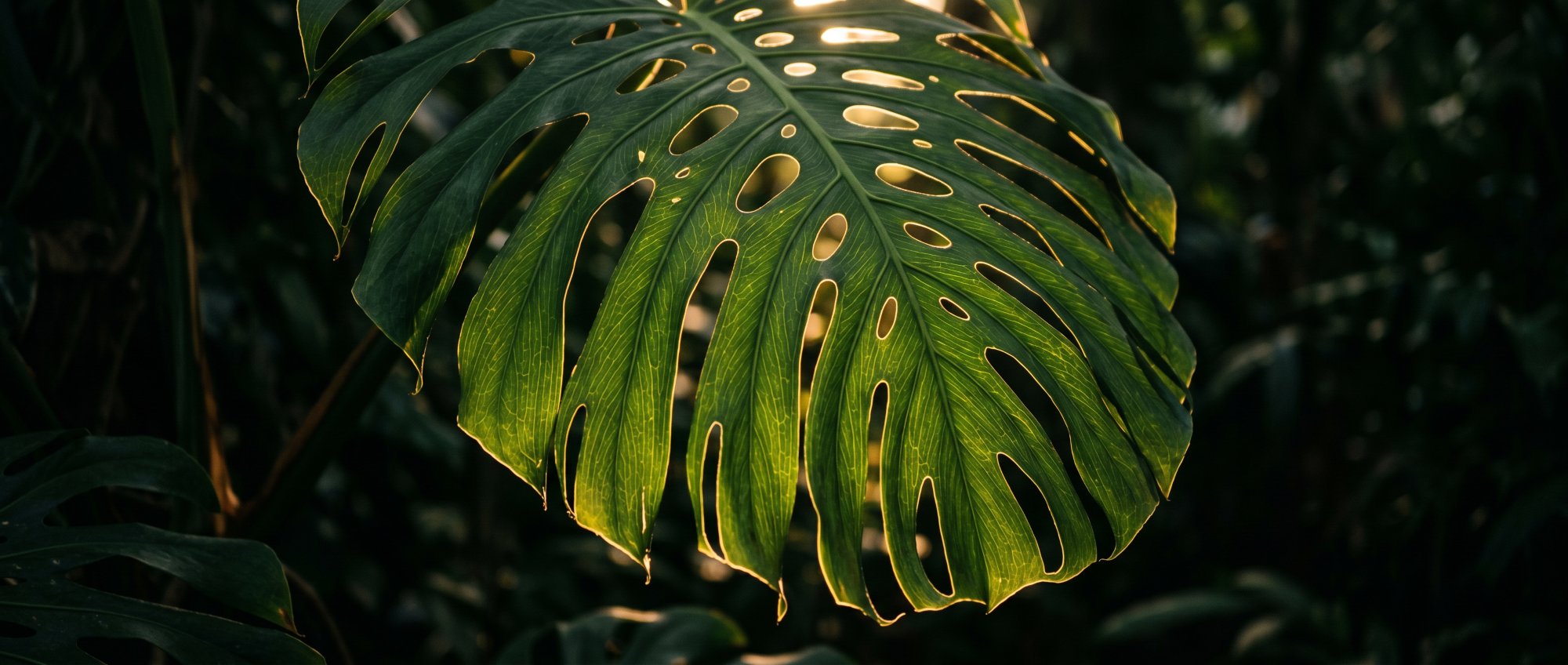
Why Monstera Leaves Have Holes

The holes aren't damage and they aren't decoration. They're drawn in by cells that are programmed to die, then enlarged as the leaf inflates, and the best science reads them as a bet on catching scarce, flickering light. Solid juvenile leaves are normal; light and height are what bring the fenestrations.
Live
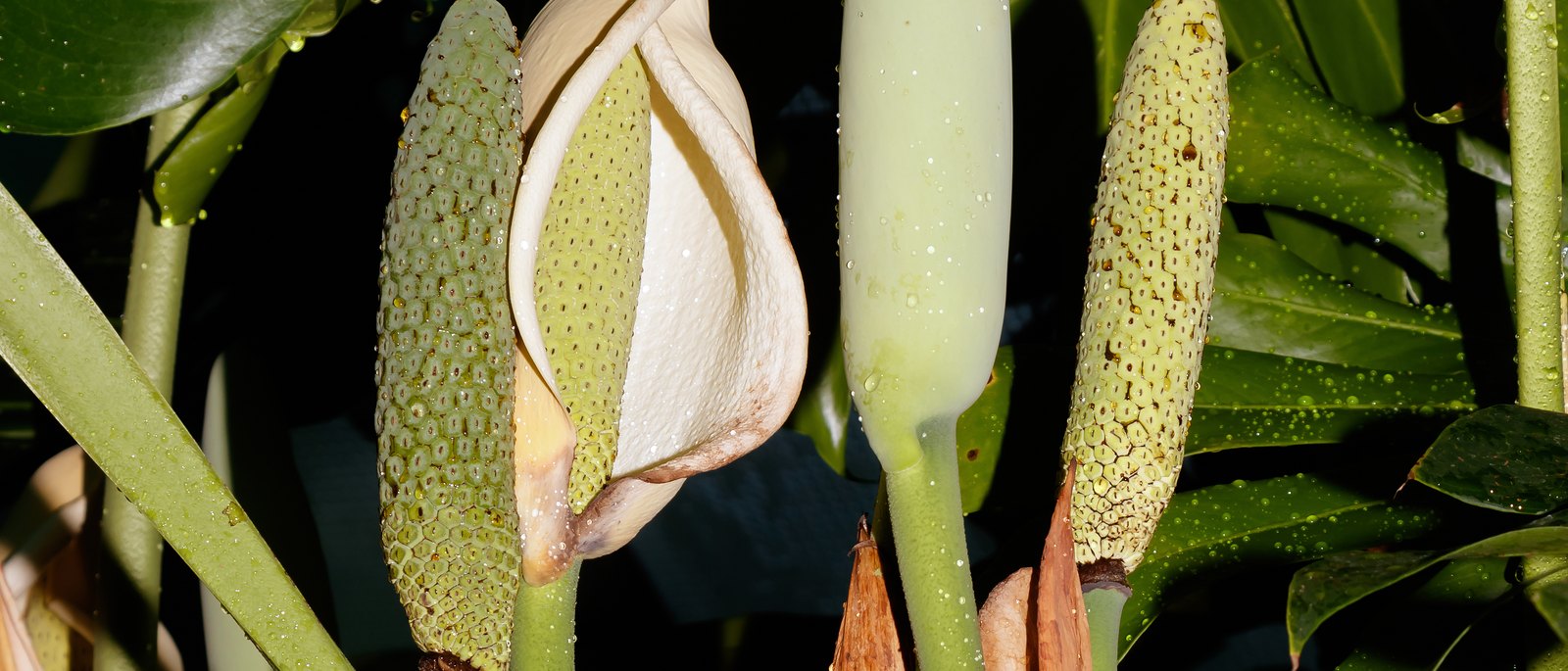
Monstera deliciosa flowering in a greenhouse: a creamy spathe opened around its pale flower-packed spadix Essay · Reproduction

Field Manual · Genus essay

The Flower You'll Never See

Your Monstera will almost never bloom indoors, and the reason is a strange wild routine: the spike heats itself, draws in sap beetles after dark, and switches from female to male overnight to force pollen between separate plants. The famous corn-cob fruit is the last step in that chain, which is why a windowsill plant never gets there.

Live

Section 02 · Species profiles

Plants worth knowing.

Per-species deep dives. Wild origin, physical description, what the plant actually wants in cultivation, the moods that mean trouble. Editorial-pure — no commercial CTAs.

Adult Monstera deliciosa on a moss pole in a terracotta pot by a sunlit window In the queue

Profile · Climbing hemiepiphyte

Monstera Deliciosa: The Plant That Named the Houseplant Era

The species. Native to southern Mexico down through Panama. The fruit is edible after a year of ripening and tastes faintly of pineapple, which is where the name came from. The plant on the windowsill is a juvenile pretending to be an adult; the real specimen lives in a tree.

Drafting
Monstera adansonii hanging in a macrame planter by a bright apartment window In the queue

Profile · Climbing hemiepiphyte

Monstera Adansonii: The Swiss Cheese With a Real Identity Crisis

The most-misidentified plant in the houseplant trade. The fenestrations open earlier and stay smaller than M. deliciosa. The plant most often sold as M. obliqua is this one. The plant most often grown by people who think they have M. obliqua is also this one.

Drafting
Juvenile Monstera dubia shingling against bark In the queue

Profile · Shingler

Monstera Dubia: The Shingler That Lives in Two Bodies

One of the most dramatic juvenile-to-adult transformations in the aroid family. The juvenile presses flat against tree bark like overlapping shingles, silver-green and tiny. The adult fenestrates into a different plant entirely. Same individual, two architectures.

Researching
Juvenile Monstera siltepecana with silvery juvenile foliage on a small moss totem In the queue

Profile · Climbing hemiepiphyte

Monstera Siltepecana: Silver Until It Isn't

Juveniles wear a silver pattern on dark green leaves that disappears completely at maturity. The plant most people buy and the plant it eventually becomes are visually unrelated. A masterclass in why the genus rewards reading past the marketing photo.

Researching
Adult Monstera epipremnoides showing elongated parallel fenestrations In the queue

Profile · Climbing hemiepiphyte

Monstera Epipremnoides: The Skeleton in the Family

Sold widely as Monstera Esqueleto, which is a clone of M. epipremnoides with so many fenestrations the leaf is more hole than leaf. Costa Rican cloud forest origin. The plant that finally taught the trade that a Latin name and a marketing name can describe the same thing.

Researching
Delicate lacy Monstera obliqua foliage In the queue

Profile · The unicorn

Monstera Obliqua: The Plant Almost Nobody Actually Has

Genuinely rare. Genuinely small. Genuinely fenestrated to the point of looking architectural. The plant Madison flagged in 1977 as widely confused with M. adansonii; the confusion is now nearly total. If you bought one for under $300 at retail, you probably have an M. adansonii.

Researching
Variegated Monstera standleyana with long entire leaves and creamy variegation In the queue

Profile · Climbing hemiepiphyte

Monstera Standleyana: The Cousin That Refuses to Fenestrate

Elongated leaves, no fenestrations, often variegated with cream or yellow. The Monstera that decided being a Monstera wasn't the assignment. Native to Central America, recently widely available, frequently mislabeled as Philodendron in retail.

Researching

Section 03 · Variegated Cultivar Library

The five faces of variegation.

Variegated Monsteras run the full spectrum from stable chimeric mutations to unstable somatic sports. Most of the famous ones are M. deliciosa; one is an old surprise. Treat each entry as a guide to a way of growing, not a single specimen.

Thai Constellation specimen in terracotta pot beside an aerial root climbing a wall In the queue

Variegated Cultivar · Lineage 01

The Thai Constellation Group: Stable Speckled Variegation

A tissue-cultured M. deliciosa with cream-speckled variegation that stays stable through propagation. The variegation can't revert because every cell carries the mutation. The most predictable variegated Monstera money can buy, and the one the Petruscio collection anchors with an 18-inch aerial root specimen.

Drafting
Half-moon variegated Monstera deliciosa Albo leaf on weathered walnut In the queue

Variegated Cultivar · Lineage 02

The Albo Variegata Group: Chimeric White Variegation

The famous one. A naturally occurring chimera where half the cells lack chlorophyll. Sectoral, marbled, or half-moon patterns. The variegation will revert if you cut wrong, and propagation requires balancing every cutting on the green-vs-white ratio that keeps the plant alive.

Researching
Yellow-and-green variegated Monstera Aurea leaf on weathered walnut In the queue

Variegated Cultivar · Lineage 03

The Aurea Group: Chimeric Yellow Variegation

Yellow where Albo is white. Also called Yellow Marilyn, Aurea Variegata, or the Borsigiana Aurea. Same chimeric instability as Albo, different pigment. Tends to be slower-growing and slightly more demanding on light to keep the yellow saturated.

Researching
Pale-green Monstera Mint variegata leaf on weathered walnut In the queue

Variegated Cultivar · Lineage 04

The Mint Group: Pale Green Variegation

A newer tissue-cultured variety with pale mint-green variegation instead of cream or white. Stable like Thai Constellation but lower contrast. Reads as more naturalistic and less neon. The variegated Monstera for people who find Albo too theatrical.

Researching
Three leaves showing the progression of a variegated sport In the queue

Variegated Cultivar · Lineage 05

The Sport Phenomenon: Unstable Variegation in the Wild

What happens when a non-variegated Monstera spontaneously throws a variegated leaf. Usually unstable, usually reverts, occasionally locks in. The genetic accident that produced every famous variegated Monstera before tissue culture made them reproducible.

Researching

Section 04 · The Disambiguation Entry

The cousin imposters: what's not a Monstera.

Three plants get sold as Monstera that aren't. One isn't even close. The Guild's job is to name what's what — and explain why it matters when you go looking for substrate, light, or a humidity range.

Rhaphidophora tetrasperma is sold as "Mini Monstera" or "Monstera Minima" in every plant shop in North America. It's not a Monstera. It's not even in the same tribe. The leaves fenestrate, which is why the marketing works, but the genus separated from Monstera tens of millions of years ago.

Epipremnum pinnatum "Cebu Blue" is sold as a Monstera relative or sometimes as a Monstera cultivar. It's a pothos. The juvenile is silver-blue; the adult fenestrates dramatically. Same hemiepiphyte strategy, different plant.

Philodendron giganteum and a handful of large-leaved Philodendrons get casually called Monsteras by people who've stopped reading labels. They're not. The geniculum tells you in five seconds.
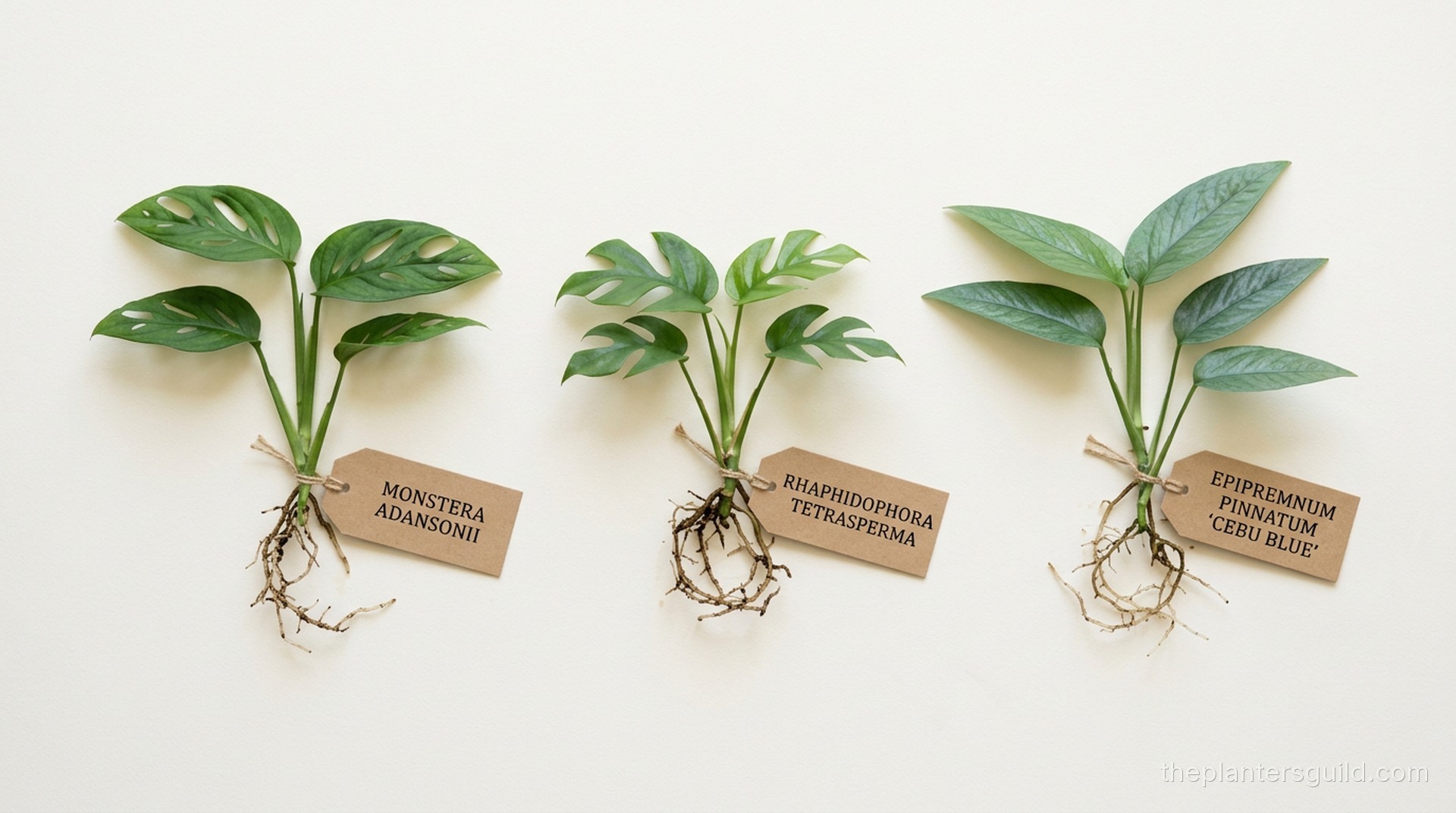
Three young aroid plants labeled Monstera adansonii, Rhaphidophora tetrasperma, and Epipremnum pinnatum Cebu Blue